If you don’t have $1,600 to drop on a used RTX 4090—let alone enterprise capital for an H100—what is the smartest entry point into decentralized compute hosting?
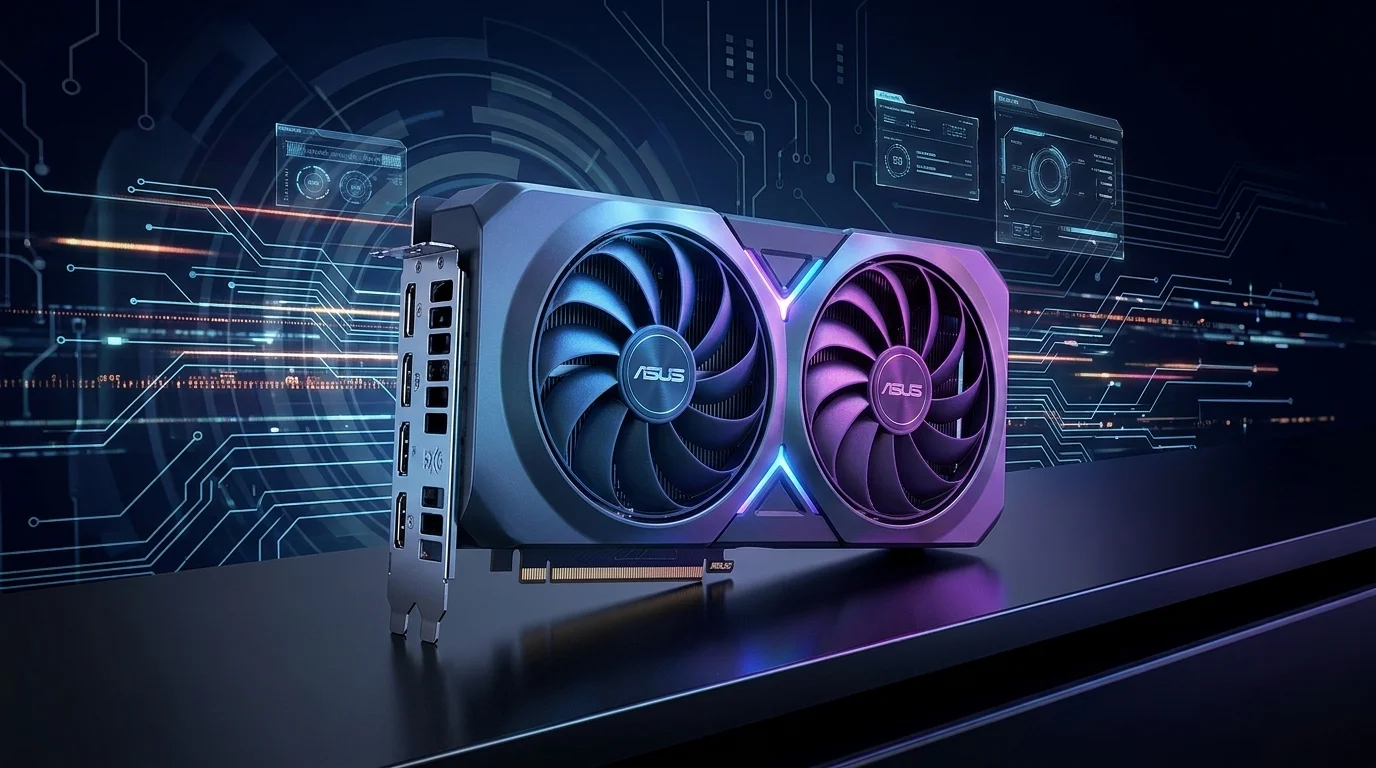
For thousands of home operators, the answer has consistently been the NVIDIA GeForce RTX 3060 12GB.
First released back in early 2021, this card has outlived multiple architectural generations in rental demand. While newer, faster cards like the RTX 4060 (8GB) sit unrented for days, the humble 3060 12GB continues to see steady container bookings on networks like Vast.ai{:target=“_blank” rel=“sponsored nofollow noopener”} and Clore.ai{:target=“_blank” rel=“sponsored nofollow noopener”}.
Why does an older mid-range card hold such resilient demand, what are the realistic monthly earnings, and does building a multi-3060 rig still make financial sense in 2026? Let’s run the numbers.
💡 Quick Answer: The RTX 3060 12GB remains profitable because 12GB VRAM is the absolute minimum memory threshold to run quantized 7B/8B language models (like Llama 3 8B). At an average secondary market price of ~$230 (typically $220–$240 used) and drawing only 170W under load, it delivers a payback period of ~9 to 10 months, easily beating newer 8GB cards that suffer frequent Out-Of-Memory (OOM) rental crashes.
1. The 12GB VRAM Rule: Why Memory Trumps Raw Speed
In computer gaming, raw rasterization speed and clock cycles matter most. In decentralized AI rental, VRAM capacity is the gatekeeper.
AI tenants renting cheap consumer instances on decentralized clouds generally run specific lightweight workloads:
- Small Language Models (SLMs): Loading quantized 7-billion and 8-billion parameter models (such as Llama 3 8B, Mistral 7B, or Qwen 2.5) via Ollama, vLLM, or text-generation-webui.
- Image Generation: Stable Diffusion 1.5, SDXL Turbo, or basic ComfyUI workflows.
- Audio & Transcription: Running local Whisper large-v3 speech-to-text nodes.
A 4-bit or 8-bit quantized 8B model requires roughly 6GB to 9GB of VRAM just to reside in memory, plus additional buffer space for the context window (KV cache).
- An 8GB card hits CUDA Out-Of-Memory (OOM) errors almost immediately, causing tenant containers to crash.
- A 12GB card loads the weights with room to spare for reasonable context lengths.
Because developers cannot complete their task on an 8GB card regardless of how fast the core clock is, they deliberately filter marketplace searches for minimum 12GB VRAM. If you have a bigger budget and want more power, check out our RTX 4090 Hosting Profitability Guide.
👉 Check active hardware availability requirements on our Host Eligibility Matrix.
2. Current Marketplace Rental Rates for the RTX 3060
Here is the realistic pricing landscape for an RTX 3060 12GB (On-Demand medians, verified October 2026 across active API telemetry):
| Platform | Renter Price (USD/hr) | Estimated Host Net Rate | Status / Notes |
|---|---|---|---|
| Vast.ai | $0.10 | ~$0.08 / hr | Deepest supply; high density of multi-card student nodes |
| Clore.ai | $0.11 | ~$0.09 to $0.10 / hr | Crypto-settled; popular with former ETH mining rigs |
| RunPod | $0.20 | Renter Reference Only | Closed to new individual providers |
On Vast.ai, dividing the $0.10/hr median renter price by the standard 1.25 platform divisor yields a net return of roughly $0.08 per hour to the host.
While $0.08/hr sounds modest compared to an RTX 4090 ($0.41/hr), the upfront capital required to acquire the hardware is nearly seven times lower.
👉 Model your exact take-home rate in our interactive Hosting Calculator. To understand how platform fees reduce your net, read our Net Earnings Guide.
3. The Monthly Math: Power, Net Income, and Payback
Let’s model a single RTX 3060 12GB under realistic home-hosting conditions:
- Used Card Acquisition Price: ~$230 USD (market range $220–$240)
- Load Power Draw: 170W TDP under load
- Idle Power Draw (~15%): ~25W standby draw
- Electricity Rate: $0.12 per kWh
- Utilization Rate: 60% (~432 active hours, 288 idle hours per month)
Daily Energy and Financial Breakdown
Daily Revenue: $0.08/hr × 24 hrs × 0.60 utilization = $1.15 / day
Daily Power Consumption:
- Active: 0.17 kW × 14.4 hrs = 2.448 kWh
- Idle: 0.025 kW × 9.6 hrs = 0.245 kWh
- Total: 2.693 kWh / day
Daily Electricity Cost (at $0.12/kWh): 2.693 kWh × $0.12 = $0.32 / day
Net Daily Profit: $1.15 − $0.32 = $0.83 / day
Net Monthly Profit: $0.83 × 30 days ≈ $24.90 / month
Capital Payback Period
Using an average hardware cost of $230:
Payback Horizon = Hardware Cost ÷ Net Daily Profit = $230 ÷ $0.83/day ≈ 277 days (~9.2 months)
A ~9-month payback timeline on a $230 used card makes the 3060 12GB one of the fastest capital-recovery cards in consumer hosting, rivaling the payback timeline of the far more expensive RTX 4090.
Learn more about how standby power changes these numbers in our Idle Power Factor Guide.
4. RTX 3060 12GB vs Newer 8GB Cards (The VRAM Trap)
When builders look at retail shelves, they often see the RTX 4060 8GB or RTX 3070 8GB available at attractive price-to-performance points. Buying an 8GB card specifically for AI cloud rental is almost always a mistake.
| Factor | RTX 3060 12GB | RTX 4060 8GB | RTX 3070 8GB |
|---|---|---|---|
| VRAM Buffer | 12GB GDDR6 | 8GB GDDR6 | 8GB GDDR6 |
| Secondary Market Cost | ~$220 - $240 | ~$280 - $300 | ~$280 - $320 |
| Llama 3 8B Compatible? | ✅ Yes (Q4 / Q8) | ❌ Frequently crashes (OOM) | ❌ Frequently crashes (OOM) |
| Marketplace Utilization | Steady (60%–75%) | Low / Erratic (<30%) | Low / Erratic (<30%) |
| Payback Horizon | ~9.2 Months | ~24+ Months | ~24+ Months |
While alternatives like the older RTX 2060 12GB or enterprise Tesla P40 (24GB) exist on the fringe, the 3060 12GB has very limited competition in modern PCIe plug-and-play budget nodes due to its balanced power-to-memory architecture.
👉 Compare active listing rates across architectures on our Market Rates Table.
5. Hidden Operational Costs to Consider
Before purchasing hardware, budget for three silent profit-eaters. Combined, they typically reduce gross revenue by 2% to 5% annually—enough to stretch a 9-month payback into 11 months if unaccounted for:
-
Component Wear & Tear: Running cards 24/7 degrades sleeve-bearing cooling fans faster than intermittent gaming. Budget ~$15 for replacement fans every 18 months, or roughly $10/year per card.
-
Platform Withdrawal Fees: Payout rails (whether Stripe/Wise fees on Vast or gas/exchange fees when liquidating CLORE tokens) typically consume 1% to 3% of gross transfers.
-
Local Income Taxes: In most jurisdictions, compute hosting revenue is classified as self-employment or commercial rental income. Depending on your bracket, this can represent 15% to 30% of net profit. Consult a local accountant before scaling beyond one rig; retroactive tax bills have ended more hosting operations than hardware failures ever have.
Estimated combined impact: ~$30–$60 annually on a single-card setup, or 2–5% of gross revenue once taxes are factored in.
6. Frequently Asked Questions
Can I build a multi-GPU rig with 4x or 6x RTX 3060 cards?
Yes. Because each card draws only 170W, you can easily power a 4-card 3060 rig on a standard residential 15A/120V circuit using a single 1000W or 1200W power supply. However, budget for the cumulative hidden costs outlined in Section 5—a 4-card rig amplifies fan wear, withdrawal fees, and tax liability proportionally.
Why do some listings show RTX 3060 8GB?
NVIDIA released a cut-down 8GB variant with a 128-bit bus. When buying used hardware, ensure you get the original 12GB (192-bit) model, as the 8GB version struggles with AI rental demand.
What happens if my electricity cost is $0.20/kWh?
At $0.20/kWh, daily power cost rises to $0.54, reducing net daily income to ~$0.61/day and stretching payback to roughly 12.5 months. See our GPU Electricity Cost Ceiling Guide for full threshold math.
How much does it cost to run a 4-card RTX 3060 rig monthly?
At 60% utilization and $0.12/kWh, a 4-card rig generates roughly $4.60/day in revenue ($138/month) while consuming about 10.77 kWh/day ($1.29/day, or ~$38.80/month). Net profit lands around $99/month before taxes and fees, with a combined hardware payback of ~9.2 months (assuming ~$920 in total acquisition cost).
7. Sources & Official Documentation
- NVIDIA GeForce RTX 3060 Specifications — memory buffer and TDP specs (checked October 2026)
- TechPowerUp GPU Database: RTX 3060 12GB — independent power draw measurements and board analysis (checked October 2026)
- Vast.ai Host Operational Documentation — container requirements and platform divisor (checked October 2026)
- Clore.ai Provider Technical Documentation — payout structure, fee schedule, and daemon specs (checked October 2026)
- Live asking rates and platform benchmarks: GPUEARN Market Table
- Mathematical payback modeling: GPUEARN Methodology Page
Written by Alex Rivers (Senior Hardware Infrastructure Analyst) and the GPUEARN Research Team. In AI compute hosting, memory bandwidth and capacity define market demand.
Last updated: October 23, 2026